
Amazon FBA Liquidation Alternatives: Better Ways to Clear Returned Inventory


Quick Answer The main alternatives to liquidating Amazon FBA inventory are individual resale through a service, selling on your own marketplace accounts, bundling or discounting on Amazon, donating for a tax benefit and disposal. For name-brand products, individual resale through a service usually recovers the most because each unit is priced on its own merits instead of being sold in a bulk lot at a deep discount. |
Why Sellers Look for Alternatives to Liquidation
Liquidation is attractive because it is simple. A buyer takes a pallet or truckload of returned or excess inventory, pays you quickly and the problem is gone. The downside is the price. Liquidators buy in bulk and price in the risk that some units will be damaged, incomplete or hard to sell, so offers are usually a small fraction of what the inventory cost you.
If you have already compared a liquidation offer with your original cost and felt uneasy about it, you are not alone. Many sellers reach the same point and start asking what else they can do.
Alternative 1: Individual Resale Through a Service
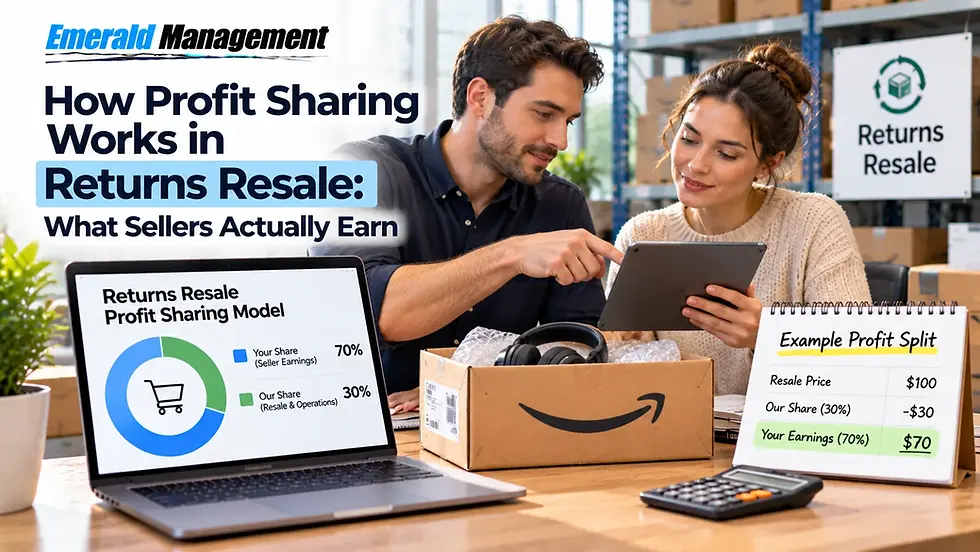
A returns resale service receives your inventory, inspects each unit and lists it on eBay and other marketplaces. When an item sells, you receive a share of the proceeds. Because every unit is priced individually, strong name-brand items can sell for a healthy portion of retail instead of being lumped into a bulk lot.
The tradeoff is timing. Units sell over days and weeks, not all at once, and you are paid monthly with a statement showing what sold. For sellers who are not in a rush, that wait is usually worth it. You can read how the full process works in our guide to a returns resale service.
Alternative 2: Sell It Yourself
You can create a removal order, receive the inventory and list it on your own eBay or other marketplace accounts. This keeps the whole sale price, minus fees, but it costs time. Inspecting, photographing, listing and shipping each unit takes effort, and the work grows with every return.
This option suits sellers with small volumes, spare time and a willingness to handle buyer questions. It is less suitable once returns become a monthly event.
Alternative 3: Discount, Bundle or Promote on Amazon
For slow but sellable stock, you can sometimes clear it without removing anything. A modest price drop, a coupon, a bundle with a faster moving product or a short promotion may restart sales. This works best before units become aged, because older inventory carries higher storage costs.
It does not apply to unsellable or returned units, which Amazon will not offer as new. That stock needs a different route.
Alternative 4: Donate Qualifying Inventory
Some sellers donate inventory to charity and claim a tax deduction. This can make sense for items that are unlikely to sell and have clear donation value. Rules vary and depend on your tax situation, so speak with an accountant before relying on it. Donation recovers some value but not cash, so it is rarely the first choice for valuable name-brand goods.
Alternative 5: Dispose of the Units
Disposal is the simplest option and the lowest return. It is the right choice only for items that are unsafe, badly damaged or without any resale market. Choosing disposal for a recognized brand in working condition leaves money on the table.
Side by Side Comparison
Option | Speed | Recovery | Effort |
Liquidation | Fast | Low | Low |
Resale service | Gradual | Higher for name brands | Low |
Sell it yourself | Gradual | High but time heavy | High |
Discount on Amazon | Medium | Medium | Medium |
Donation | Fast | Tax benefit only | Low |
Disposal | Fast | None | Low |
Why Brand Matters More Than Any Other Factor
Whatever option you consider, the type of product changes the answer. Recognized brands attract buyers who search for them by name, which is why individual resale works so well for them. Private label items usually have little outside demand, so liquidation or disposal may be fine. Our article on name-brand versus private label returns strategy explains how to sort your own catalog.
How to Choose the Right Option for Your Business
Ask yourself four questions. How much cash do I need right now? How much time can I spend? Are my products recognized brands? How large is my monthly return volume? Sellers who need cash immediately and have low value stock may choose liquidation. Sellers with name-brand products and recurring returns typically do better with a resale service.
Many sellers use a mix. They resell their best units, liquidate the leftovers and dispose of anything unusable. A good service will help you sort so each item takes the best path.
What to Ask Before You Accept Any Offer
How is the payout calculated, and when is it paid?
Will I receive a statement showing what sold?
What happens to units that do not sell?
Do I need to share my Amazon login? You should not have to.
Are there fees I will pay before anything sells?
Clear answers to these questions are a good sign. Vague answers are a reason to keep looking. If you want to compare liquidation directly with our approach, see our liquidation service page for how the two differ.
A Practical Example of Mixing Options
Suppose you have 300 returned units. Sixty are name-brand items in working condition worth reselling individually. One hundred and fifty are mid value items that could go either way. The remaining ninety are low value or damaged. A smart plan sends the first group to resale, offers the middle group to resale or a bulk buyer depending on your cash needs and disposes of the last group.
This kind of sorting often matters more than the choice of any single option. It keeps your best inventory from being sold at the lowest price just because it was packed into the same pallet as everything else.
Do Not Let Urgency Make the Decision for You
Liquidation buyers often create a sense of urgency, because their offers are tied to timing and volume. Take a day to compare alternatives before you accept. Even a short comparison can show you a significant difference in what you could recover from the same inventory.
Whatever you choose, write down the result. Comparing what each batch recovered over time shows you which path works best for your products.
Frequently Asked Questions
Q: What is the best alternative to Amazon liquidation?
For name-brand products, individual resale through a returns resale service usually recovers the most. The best option depends on your products, timeline and volume.
Q: Is liquidation ever the right choice?
Yes. If you need cash quickly, or your inventory is low value or private label, liquidation can make sense despite the lower payout.
Q: Can I use more than one option at once?
Yes. Many sellers resell strong name-brand units, liquidate low value units and dispose of unusable ones.
Q: Do I lose control of my inventory with a resale service?
No. You keep a clear record of what was sent and what sold through a monthly statement.
Compare Your Liquidation Offer to a Resale Estimate
If you have a liquidation quote in hand, get a free quote from us and see how the numbers compare for your inventory.


Comments