
How Profit Sharing Works in Returns Resale: What Sellers Actually Earn

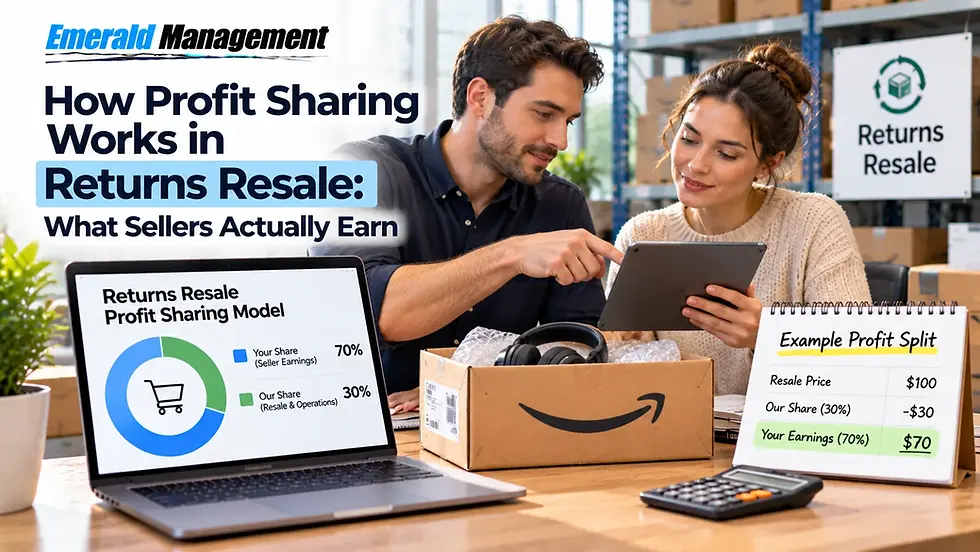
Quick Answer In a returns resale profit share model, the service sells each of your units on marketplaces like eBay, deducts agreed costs and sends you a share of the proceeds, usually with a monthly statement. Your payout depends on the brand, condition, demand and selling price of each item. Name-brand products in good condition typically recover far more than they would through liquidation or disposal. |
The Question Every Seller Asks First
Before sending any inventory, sellers want to know one thing: what will I actually earn? It is a fair question, and the honest answer is that it depends. Profit share is not a flat fee or a fixed price per unit. It follows what each item sells for, which is exactly why it can recover more than a bulk buyout.
The Basic Idea Behind Profit Sharing
You send your returned or removed inventory to the service. The service inspects, lists and sells each unit. When an item sells, the revenue is shared between you and the service according to agreed terms. The service earns its share by doing the work. You earn yours by supplying the inventory.
You do not pay to have your units sold. The service only earns when your units sell, which aligns both sides toward the same goal.
A Simple Illustration
Imagine a name-brand item that cost you 40 dollars and sells new for 60 dollars on Amazon. Returned and opened, it might sell on eBay for 35 dollars. Under a profit share model, you receive your agreed share of that sale after eligible costs. Under a bulk liquidation deal, the same item might be bought for only a few dollars as part of a pallet.
These figures are examples only. Actual results depend on the item, its condition and the market at the time. The point is that individual pricing lets each unit reach its own best price.
What Affects Your Payout
Brand strength: recognized brands attract more buyers
Condition: like new commands more than visibly used
Completeness: missing accessories lower the price
Demand: popular items sell faster and higher
Seasonality: some products sell best at certain times of year
Price point: higher value items usually recover more in absolute dollars
That is why a good service asks about your brands and categories before it quotes you anything.
Profit Share Versus Bulk Buyout
Factor | Profit Share Resale | Bulk Liquidation |
How you are paid | Share of each sale | One fixed payment |
Speed of payment | As units sell, usually monthly | Fast |
Typical recovery | Higher for name brands | Low |
Risk to you | Pace of sales varies | None after sale |
Reporting | Itemized statement | Often limited |
Neither is wrong. Liquidation is built for speed and certainty. Profit share is built for recovery. For a deeper look at the numbers, see our comparison of removal order, disposal and liquidation.
What a Good Monthly Statement Shows
Transparency is what makes profit sharing work. A good statement lists each unit sold, the sale price, any deducted costs and your share. It should also give you a clear view of what is still waiting to sell. If you cannot see these details, you cannot trust the numbers.
What About Units That Do Not Sell?
Not every item sells quickly. Before you send inventory, ask what happens to units that remain unsold after a period of time. Common answers include lowering the price, moving them into a bulk lot or disposing of them. A clear policy shows the provider has thought about it.
Setting Realistic Expectations
Be wary of anyone who promises a fixed high percentage of retail without seeing your products. Honest estimates come after a review of your brands, volumes and typical condition. Expect results to vary between batches, and judge a service over several months, not a single shipment.
If you want to see how this fits into getting your capital back, read our guide to recovering capital from Amazon removal orders.
How to Get a Fair Estimate
The best way is to share a sample of your inventory list, including brands, quantities and general condition. From there, a service can give you a sense of what to expect. A quote request on our returns management page is a good starting point, and there is no obligation to send anything afterward.
Why Profit Sharing Aligns Interests
When a service earns only from what sells, it has a clear reason to price carefully, photograph well and list quickly. A bulk buyer, by contrast, earns from buying low and selling later. Neither is dishonest, but the incentives are different. Profit sharing puts both parties on the same side of the transaction.
Common Questions Sellers Have About Costs
Sellers often wonder what costs are deducted before the split. These can include marketplace fees, shipping to the buyer and sometimes handling or supplies. The exact list depends on the provider. Ask for it in writing and compare it across providers so you are not surprised by your first statement.
Marketplace fees charged when an item sells
Shipping and packaging costs to send the item to the buyer
Any agreed handling fee, if applicable
How Name-Brand Sellers Benefit Most
The profit share model rewards products that have real demand. Recognized brands attract buyers and support stronger prices, which raises both your share and the service's share. Private label inventory rarely generates that kind of demand, which is why resale is built around name-brand sellers.
Looking at several months of results gives you a fair view of the model. One batch can be unusually strong or weak, but the pattern over time shows what your brands are really worth.
Track Your Own Numbers Too
Keep a simple record of what you sent, what the original cost was and what you received. After a few months you will have a clear picture of your real recovery rate by brand, which helps you decide what to send, what to liquidate and what to stop buying altogether.
Good data turns a vague feeling about returns into a number you can act on, and that is the real value of any profit share arrangement.
Is It Worth Waiting for Higher Recovery?
Profit share recovers more over time, but cash arrives gradually. If you can afford to wait a few weeks or months for payouts, the extra recovery is often significant. If you need money tomorrow, bulk liquidation may suit better. Knowing your own cash needs is the key to choosing well.
Frequently Asked Questions
Q: How does profit sharing work in returns resale?
The service sells each unit on marketplaces, deducts agreed costs and sends you a share of the proceeds, usually with a monthly statement.
Q: How much will I earn from my returns?
It depends on the brand, condition, demand and price of each item. Name-brand products in good condition usually recover far more than liquidation.
Q: Do I pay anything upfront?
Terms vary by provider, so ask. Many resale services earn their share only when units sell.
Q: How often am I paid?
Many services pay monthly and provide a statement showing what sold. Confirm the schedule before you commit.
Get an Estimate Based on Your Inventory
Share what you have and get a free quote to see what a profit share approach could recover for your brands.


Comments